In Morocco, Friday means one thing at the table: a big platter of couscous shared by the whole family. Here's where the tradition comes from, and why we keep it on Greenville Ave.
Ask anyone who grew up in Morocco what Friday smells like, and they'll tell you: steam rising off a mountain of couscous, broth simmering with vegetables, and a kitchen full of people waiting for the midday meal.
Friday is the day of the week when Moroccan families traditionally gather after the midday prayer. The meal that waits for them is almost always couscous — a dish big enough to feed everyone who shows up, served on one wide platter in the middle of the table.
Steamed, not boiled.
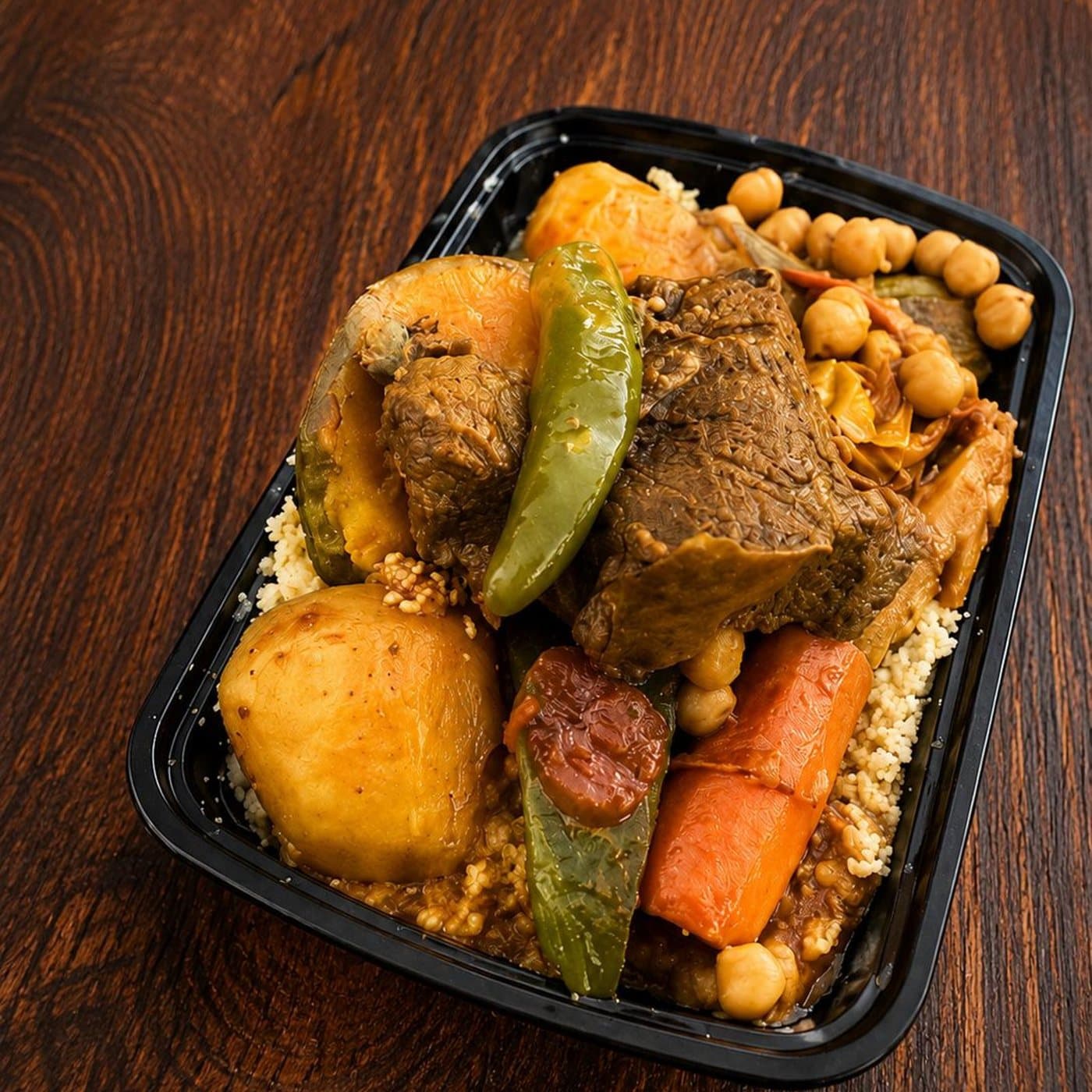
Real couscous is fine semolina steamed over a pot of simmering broth, usually two or three times, until every grain is light and separate. The meat and vegetables cook in the broth below — carrots, zucchini, turnips, cabbage, chickpeas — so the whole dish tastes of the same pot.
The platter is built in layers: couscous first, then the meat in the center, the vegetables arranged around it, and a ladle of broth over everything. More broth comes to the table in a bowl for anyone who wants it.
One platter, one spoon each, and everyone eats from the part of the mountain in front of them.
Fridays at the truck.
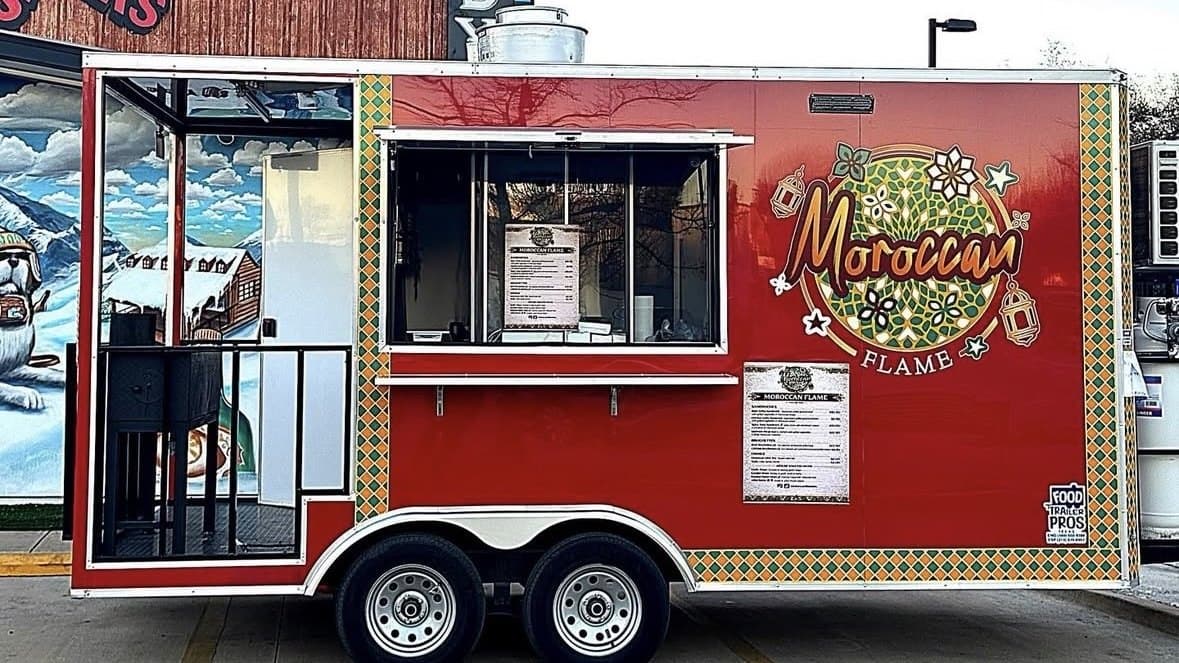
That's the dish we serve on Fridays at Moroccan Flame: tender meat, vegetables, chickpeas, and broth over steamed couscous. It's the one thing on our menu that isn't grilled, and it's the one that tastes most like a Moroccan home.
If you've never had couscous the Moroccan way, come by on a Friday. Order it for pickup, or bring a friend and share it like it's meant to be shared.
Taste it
Couscous$24.99
A 2 lb plate with meat, vegetables and chickpeas, served with buttermilk.
Every sandwich and wrap on our menu starts with one of two Moroccan breads. One is soft and pocketed, the other flaky and layered. Here's how to tell them apart.